earthship haus
Traditional housing often relies on inefficient energy systems,
wasteful water installations, and environmentally harmful materials. This not only leads to unnecessary ecological damage but also burdens residents with high costs and limited sustainability. The project explores an alternative approach: Earthship houses. These innovative, self-sustaining buildings address pressing ecological challenges by rethinking how we live, build, and consume resources.
Traditional housing often relies on inefficient energy systems, wasteful water installations, and environmentally harmful materials. This not only leads to unnecessary ecological damage but also burdens residents with high costs and limited sustainability. The project explores an alternative approach: Earthship houses. These innovative, self-sustaining buildings address pressing ecological challenges by rethinking how we live, build, and consume resources.
Description
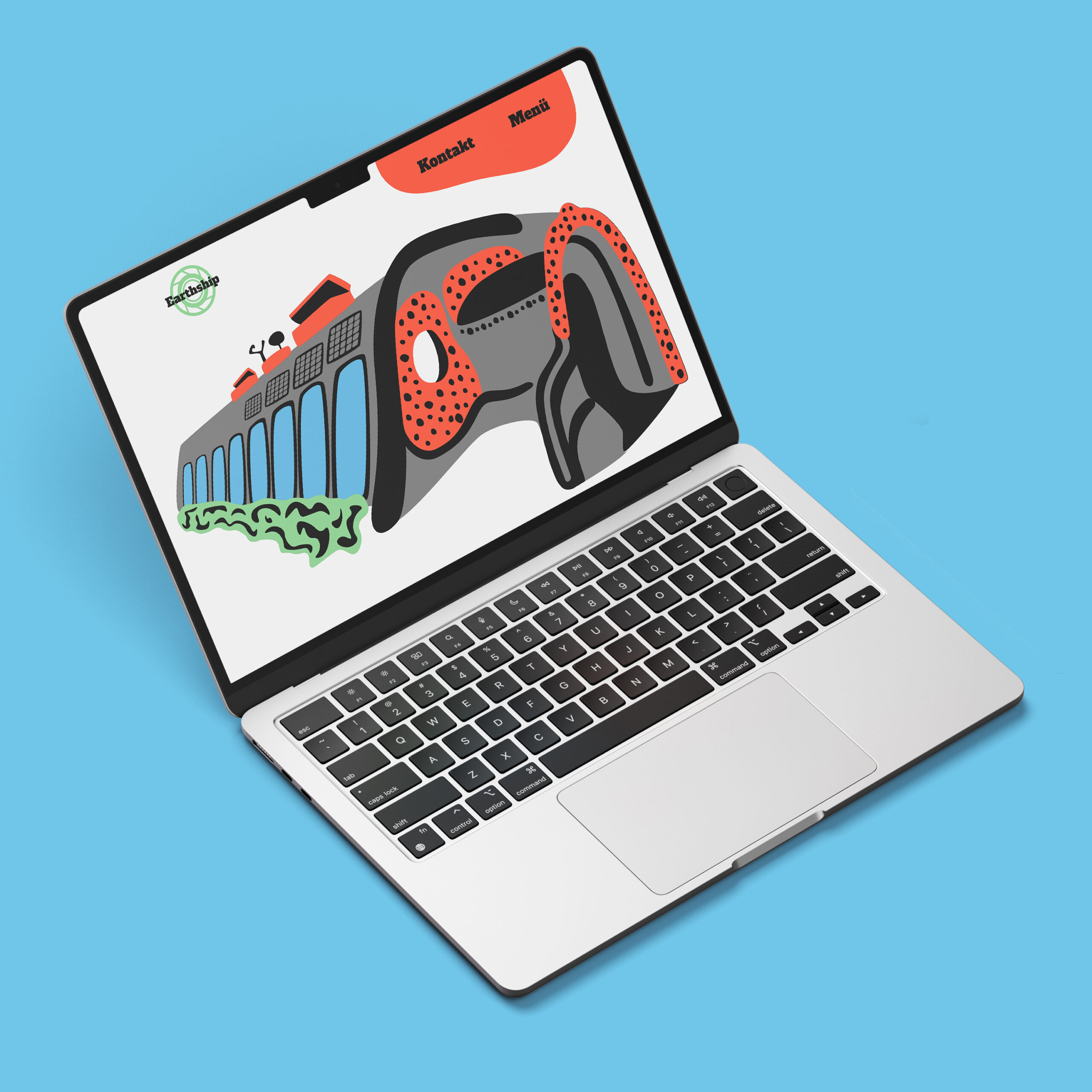
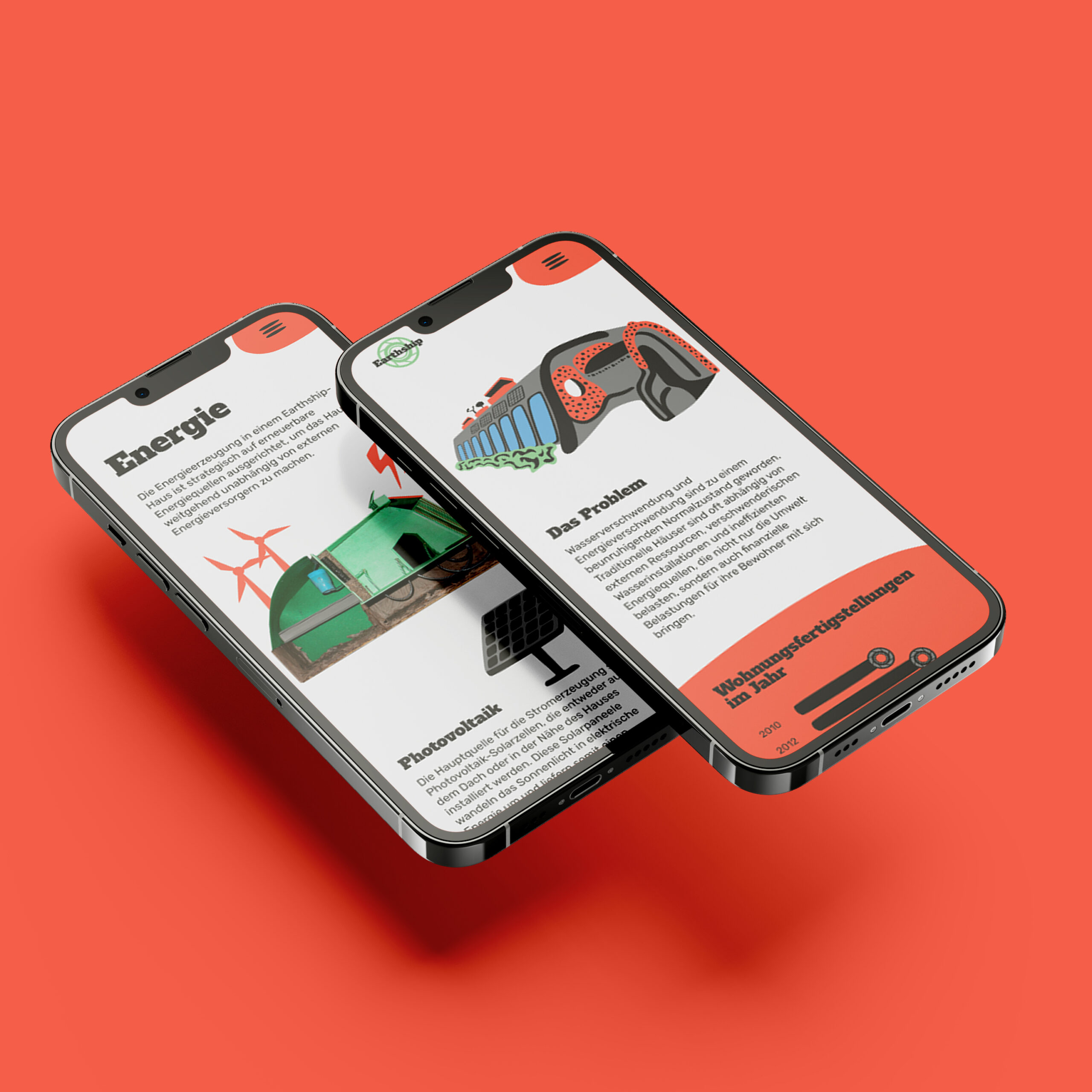
This project presents the concept of Earthship houses as a holistic response to energy waste, water scarcity, and climate inefficiency. It explains how materials, building methods, and architectural layouts contribute to sustainability, while also highlighting advanced systems for water collection, filtration, and reuse. Furthermore, renewable energy solutions like solar and wind are introduced as key components for independence from traditional infrastructure. The site combines informative content with photographs of a physical Earthship model, making the ideas tangible and accessible.
3rd Semester, oct’ 23 – feb’ 24, storytelling design
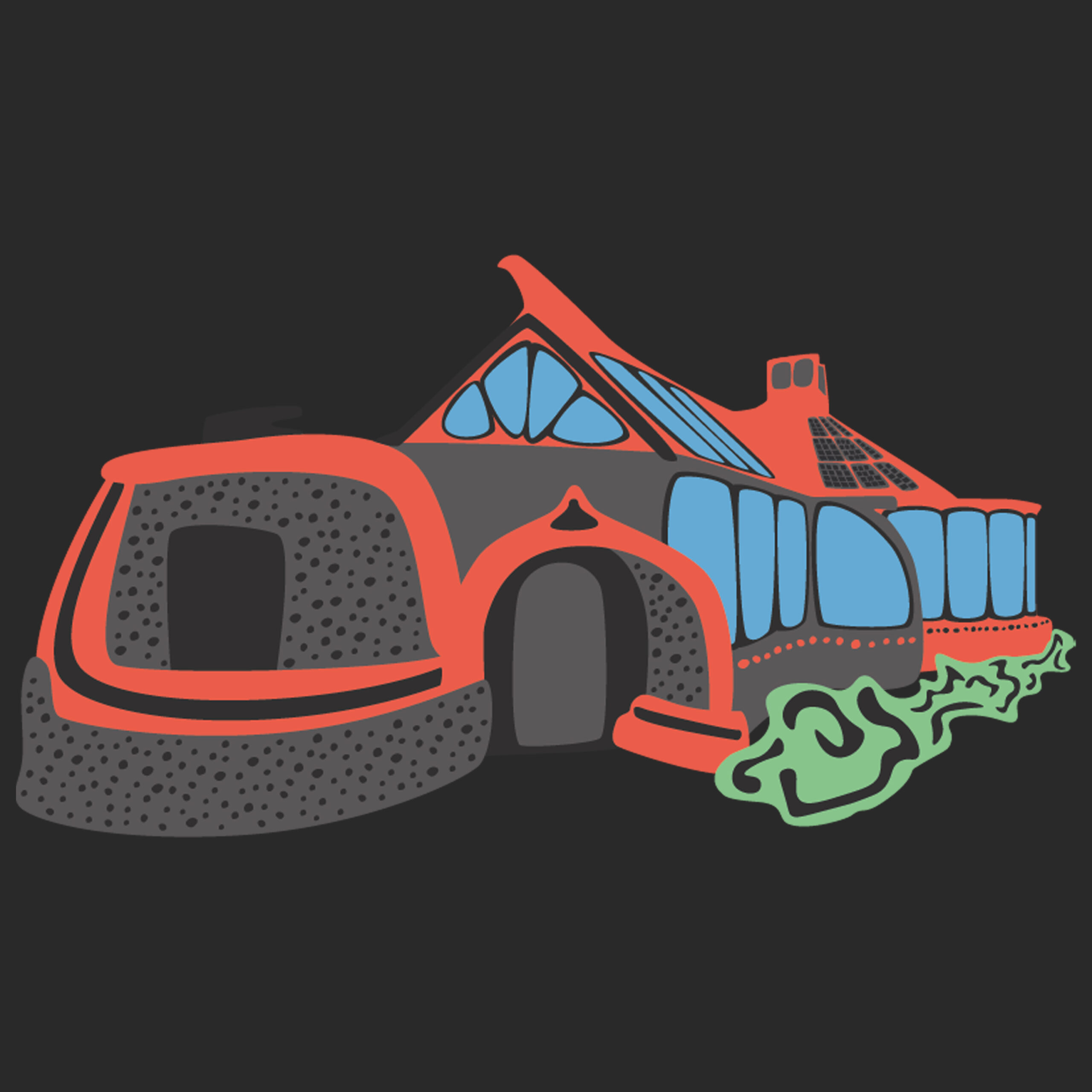
core Idea
The project aims to highlight the pressing issues of energy waste, water scarcity, and inefficiency in conventional housing, and to present Earthship houses as an alternative. By showcasing the principles of water harvesting, renewable energy use, and sustainable construction, the website shows how self-sufficient architecture can actively address ecological challenges. The idea was to design a platform that not only informs but also inspires, demonstrating that sustainable living is possible, while making these complex systems accessible through clear visuals and structured content.
Structure
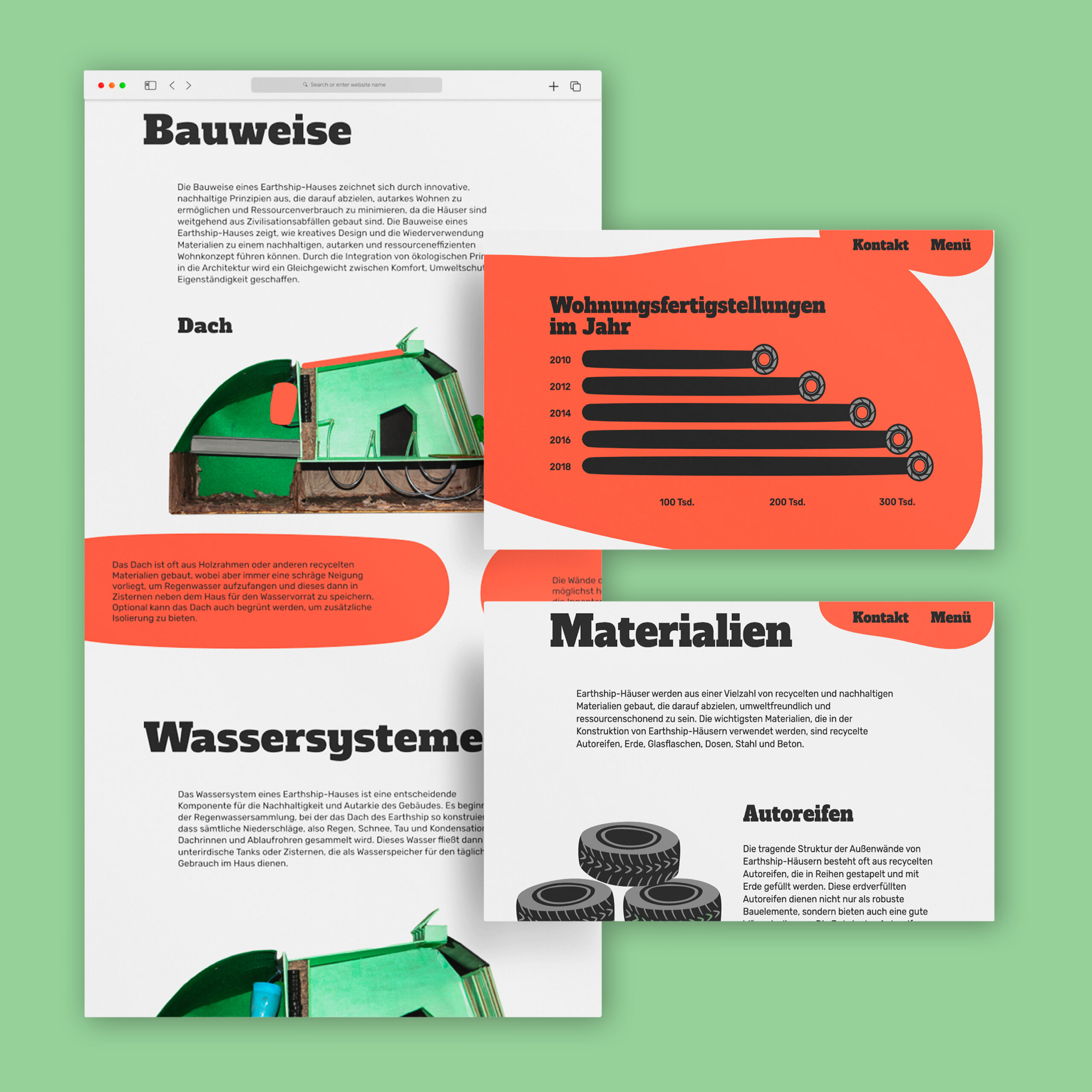
The website is structured into clearly defined categories, allowing users to explore the different aspects of Earthship houses step by step. It begins with an introduction to the overall concept, then breaks down into sections on materials, floor plan, construction methods, water systems, climate control, and energy generation. Each category presents both functional explanations and visual examples, supported by photographs of the physical model. This system makes the complex topic approachable while keeping the focus on practical solutions.
Model
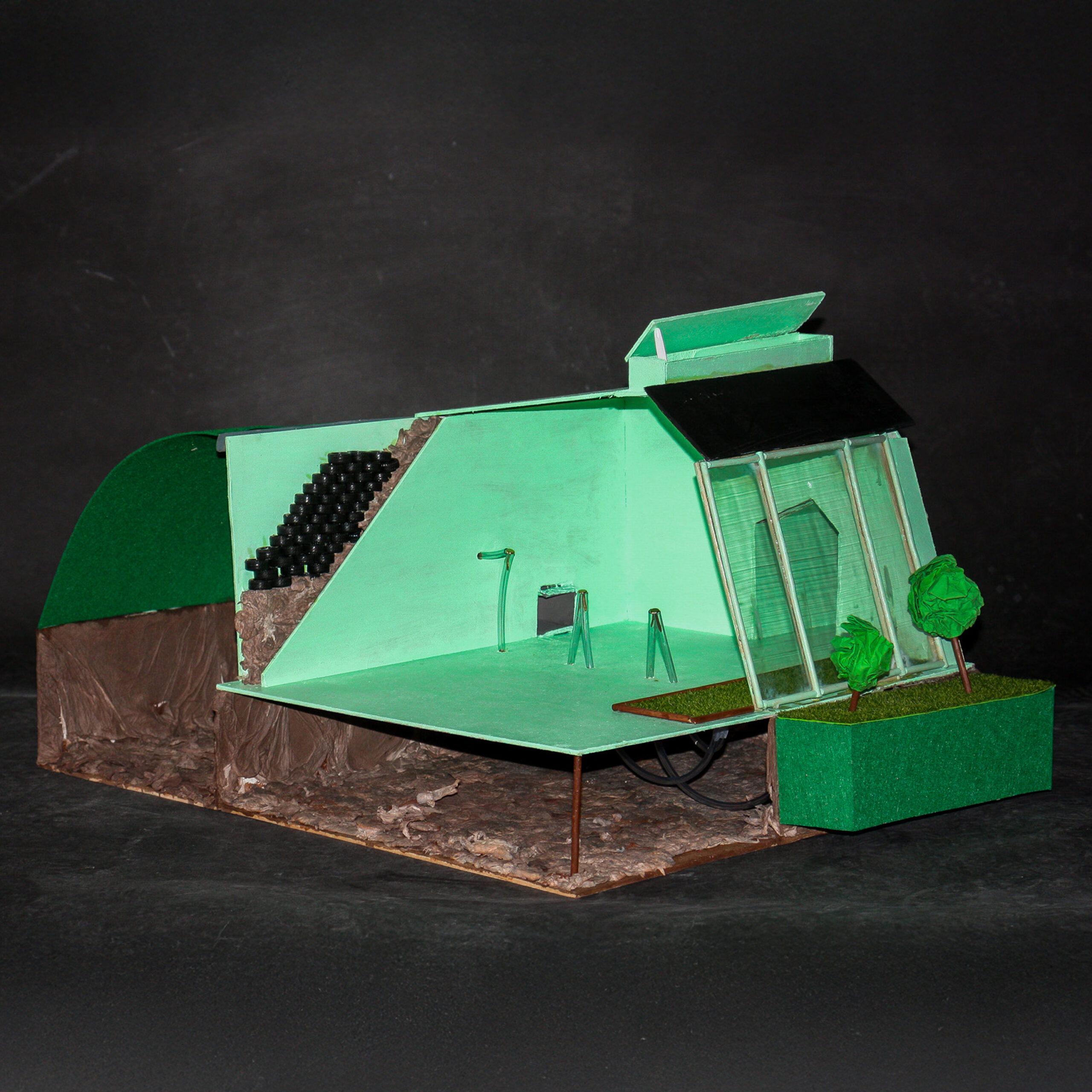
To complement the website’s content, a model of an Earthship house was constructed. This model not only served as a tool to better understand the building’s structure, layout, and systems during the design process, but also became a key visual element of the project. Photographs of the model were integrated into the website, where they illustrate the different categories. By combining text with tangible, three-dimensional representations, the model adds clarity and credibility to the explanations.
Screencast
Process
The process began with research into the ecological and architectural principles of Earthship houses. Based on this, different concepts for structuring the website were developed, either categorically or through a narrative arc that moves from problem to solution. Design explorations initially focused on variant two, which combined illustrations with photographs, before refining the color palette to red, green, and blue alongside shades of grey for emphasis and clarity. Alongside the digital design, a physical Earthship model was built and documented through photography, creating a link between concept and visualization. The final website integrates text, illustrations, and model photography into a coherent system, making the complexity of Earthship architecture accessible to a broad audience.
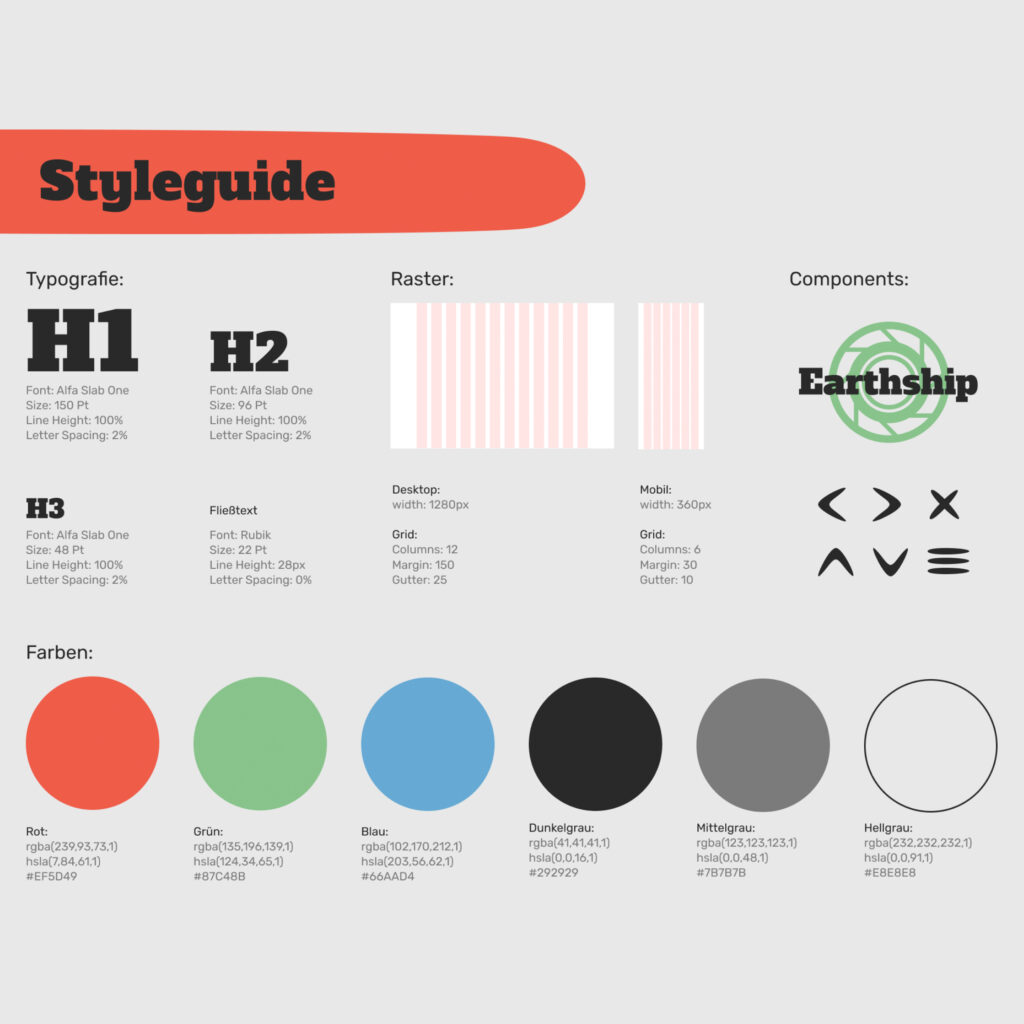
Styleguide
The style guide ensures consistency across the website. Headers use “Alpha Slab One”, paired with “Rubik” for body text, while the layout follows a 12-column grid for desktop and a 6-column grid for mobile. The color palette includes red, green, and blue as accent colors, complemented by three shades of gray. This styleguide establishes a cohesive visual language, aligning typography, color, and layout throughout the website.
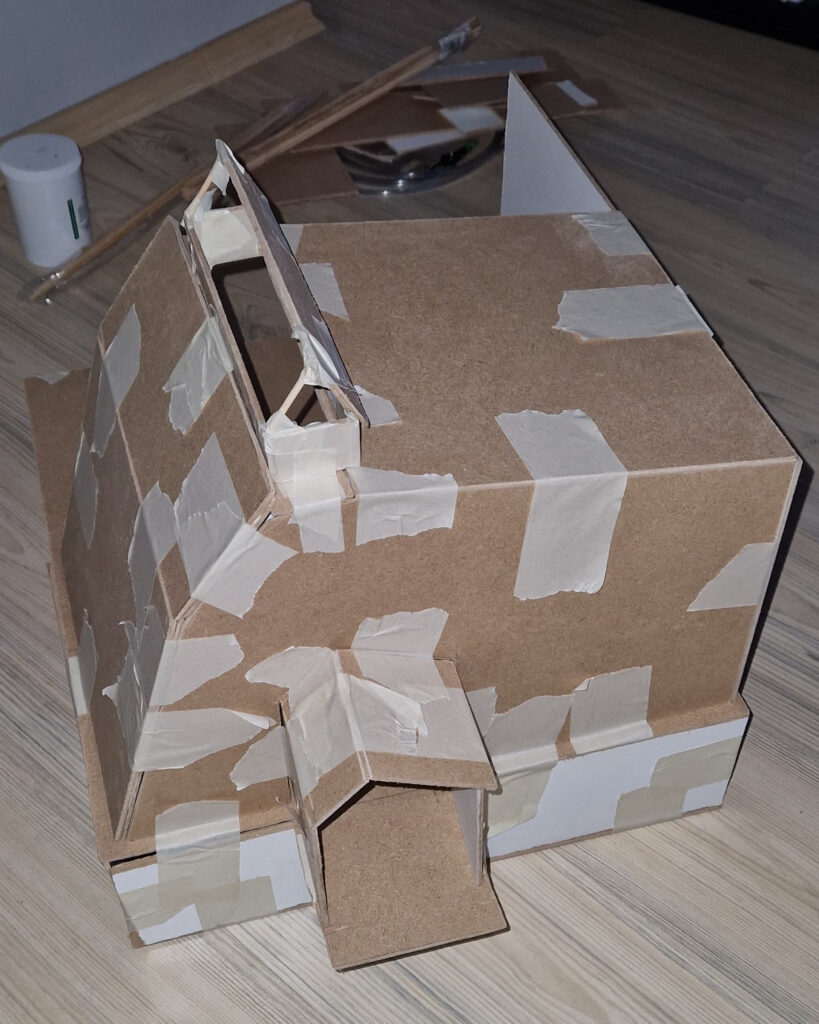
Model building
A physical model of the Earthship house was constructed using model-building sheets, small rubber tires, and transparent acrylic panels. The model was carefully painted to reflect real-world colors, accurately representing the materials used in construction. Photographs of the model are integrated into the website, providing tangible references that help users understand scale, proportions, and materiality, as well as the innovative aspects of the Earthship design.
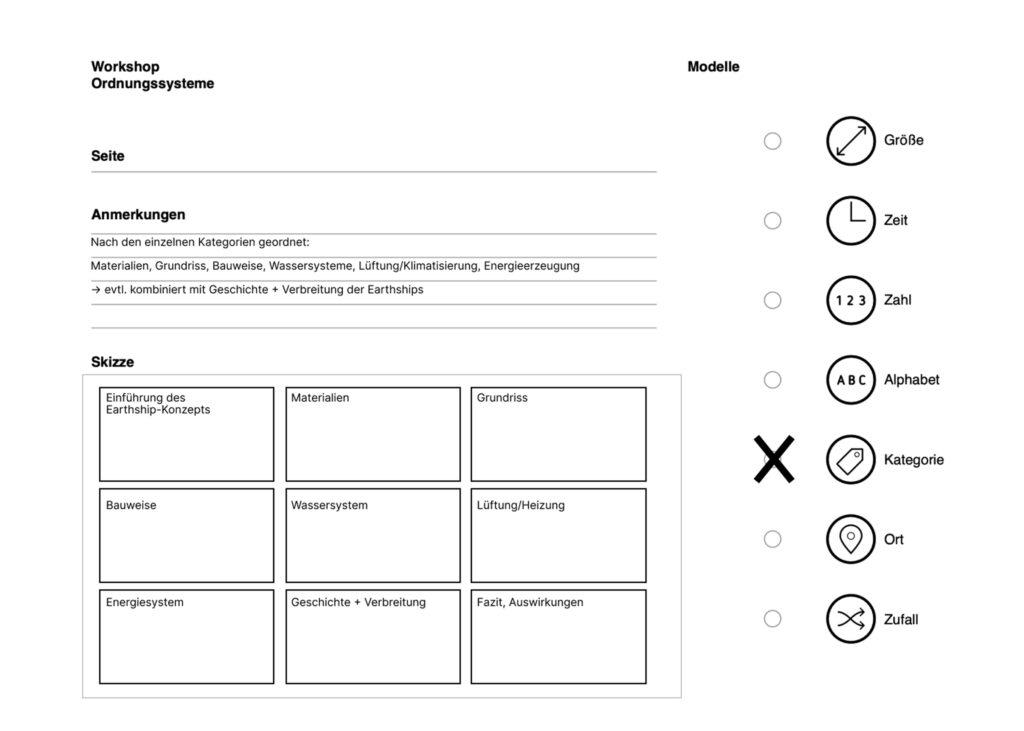
Structure
A categorical organizational system structures the website into six main sections: Materials, Floor Plan, Construction Methods, Water Systems, Climate Control, and Energy Production. This system highlights the interconnection of sustainable design elements while ensuring that technical information is accessible.
Design variants
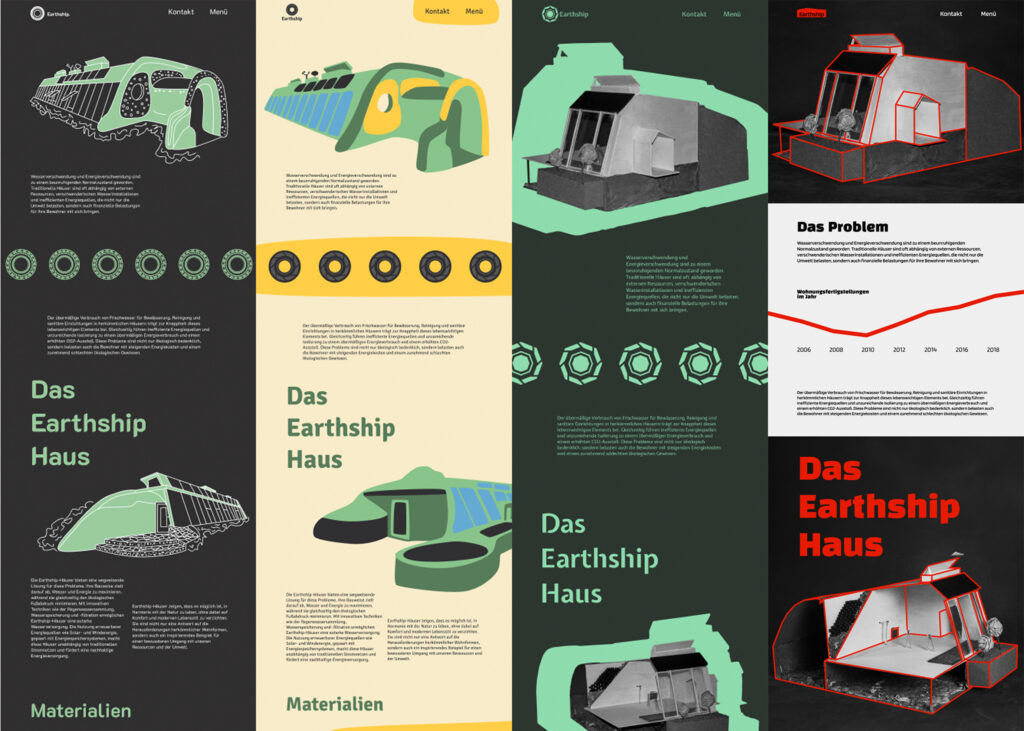
Several design variants were explored to define the visual identity and overall aesthetic of the website. Each variant was based on a different moodboard, experimenting with combinations of illustrations, photographs, and color schemes. Some variants integrate hand-drawn illustrations with photographic elements, while others rely solely on photography to achieve a clean and realistic look. The process allowed for comparison of contrasting styles and helped choosing the final style.
Storyboard
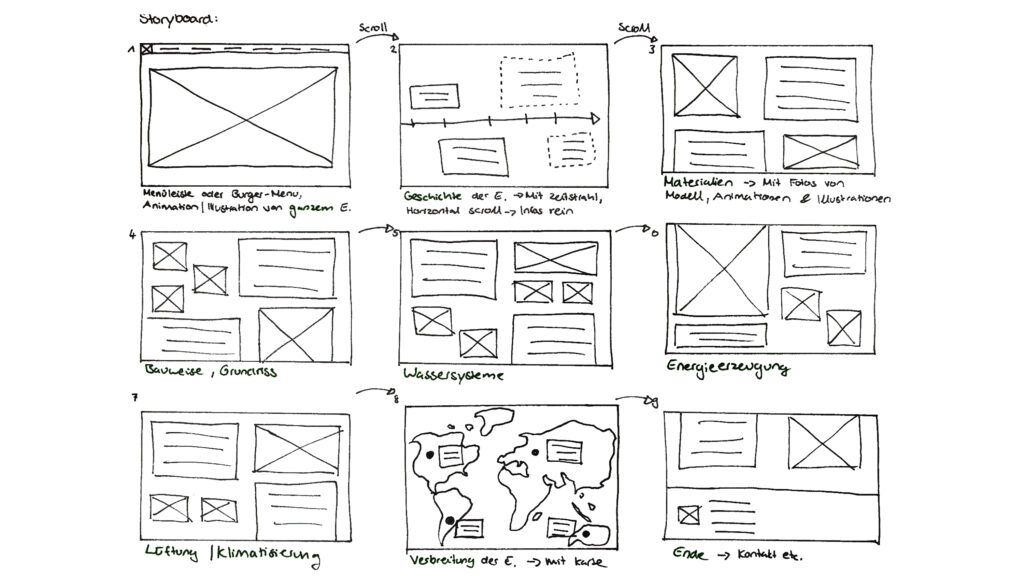
The process started with a hand-drawn storyboard. These sketches visualized the overall structure and flow of the content, helping to plan how users would navigate through the site. By mapping out the logical sequence of categories and content, the storyboard ensured that each topic followed a coherent narrative. It also allowed helped to explore the relationship between different sections, testing how to introduce problems and solutions effectively.
Wireframes
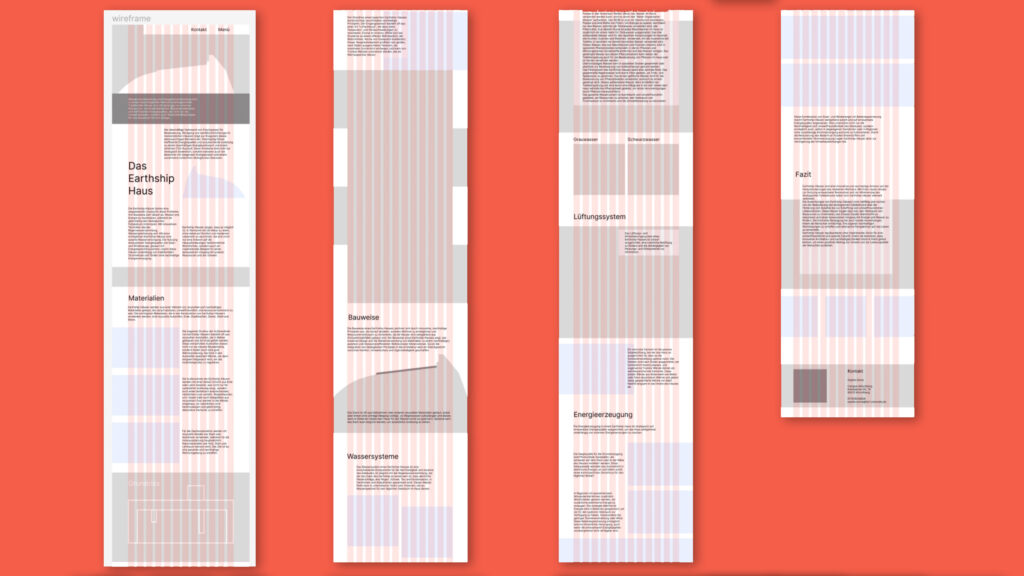
The concepts developed in the storyboard were translated into figma wireframes, defining the website’s layout and content hierarchy. This step ensures a clear, user-friendly experience and serves as a blueprint for the visual design, maintaining consistency between structure and final presentation.
Get in touch!
©Sophie Doma
2025 portfolio
7th semester, hs hof
Communication Design