Die Uhr
This project that examines the inner mechanics of traditional clocks and translates them into a form that is easier to grasp. Although clocks are part of everyday life, very
few people understand how they function. This gap between daily use and technical knowledge provided the starting point for the project. The goal was to make this abstract and often overlooked subject more accessible by combining research, design, and physical models. With explanatory texts, a clear visual system, the project allows viewers to explore the clock’s mechanism step by step.
This project that examines the inner mechanics of traditional clocks and translates them into a form that is easier to grasp. Although clocks are part of everyday life, very few people understand how they function. This gap between daily use and technical knowledge provided the starting point for the project. The goal was to make this abstract and often overlooked subject more accessible by combining research, design, and physical models. With explanatory texts, a clear visual system, the project allows viewers to explore the clock’s mechanism step by step.
Description
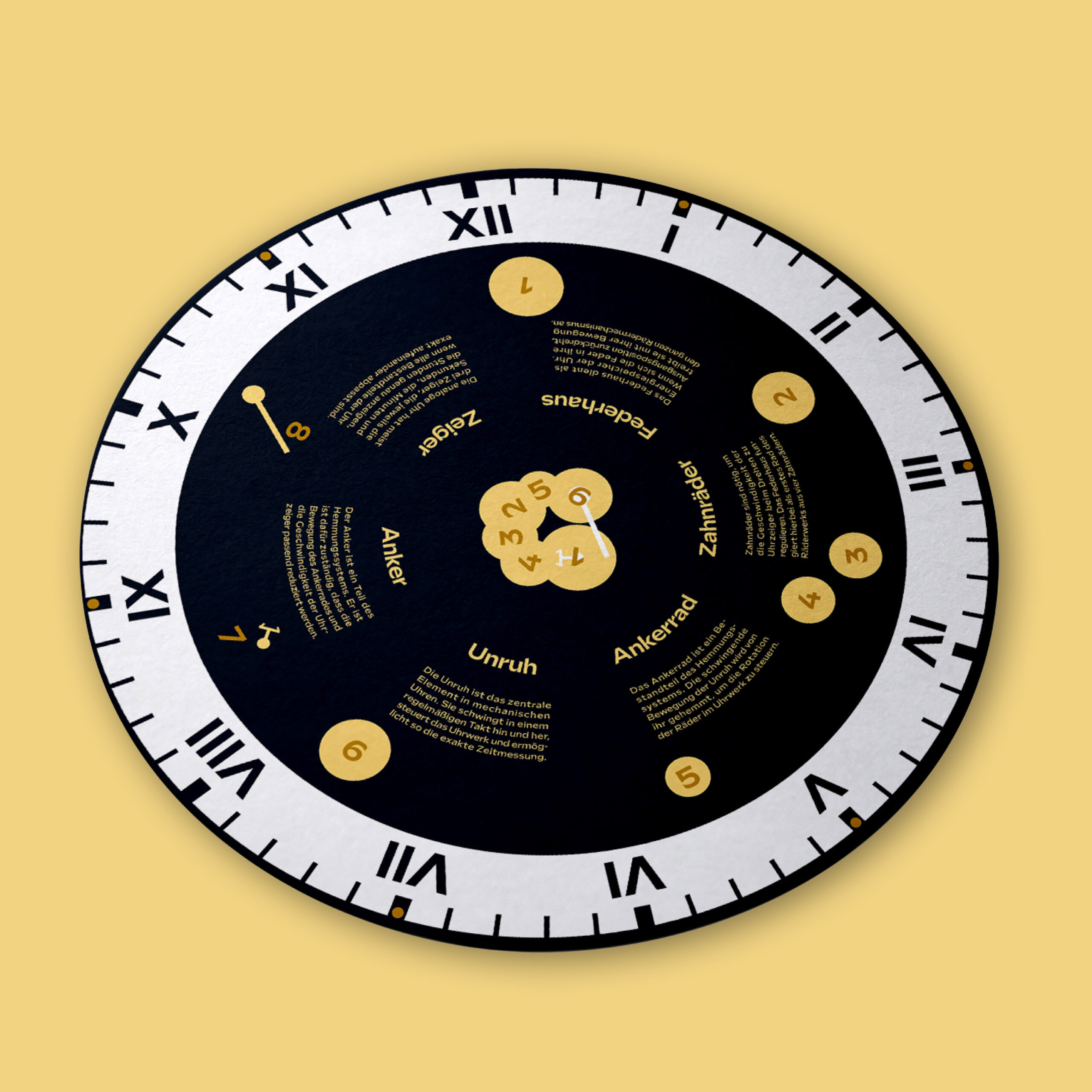
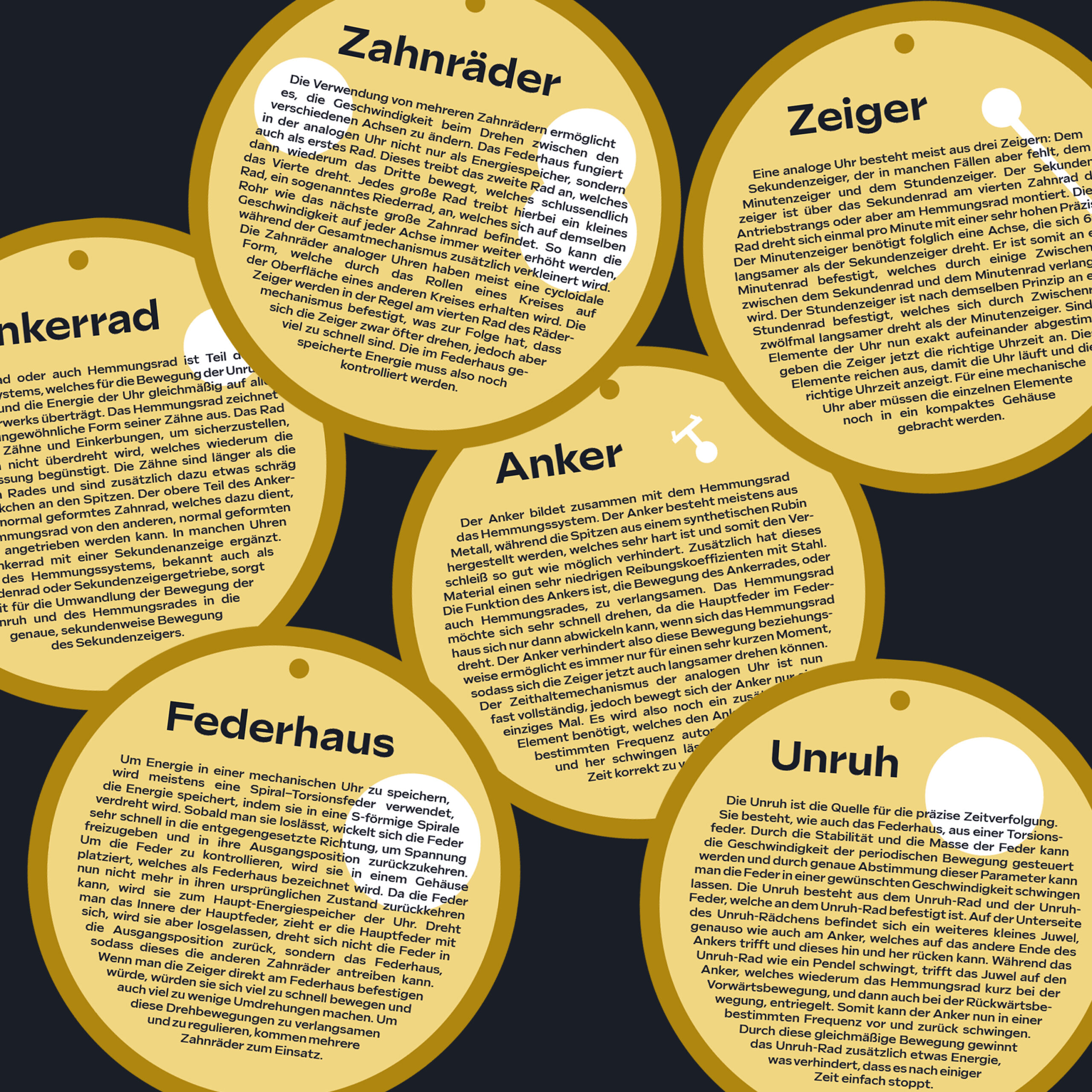
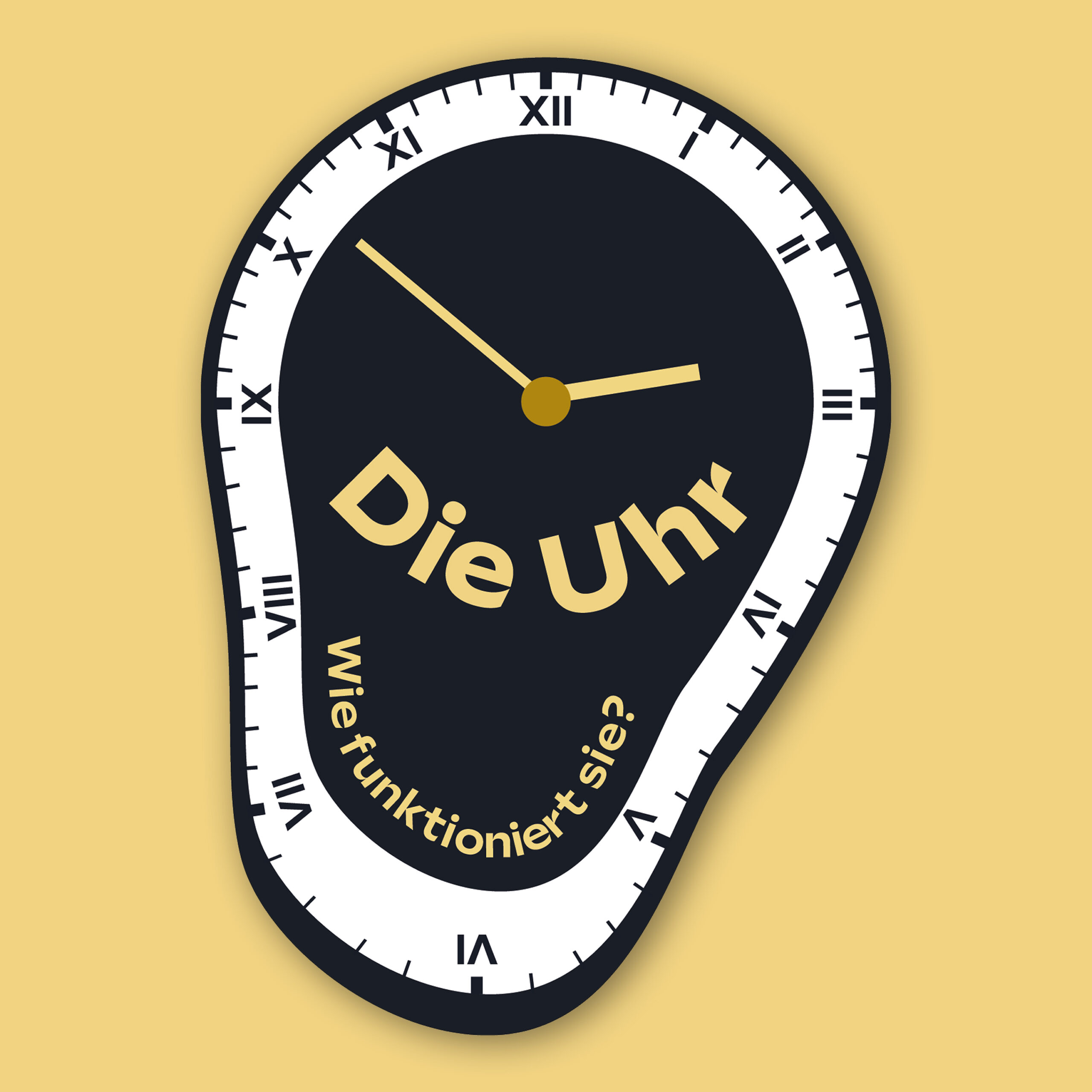
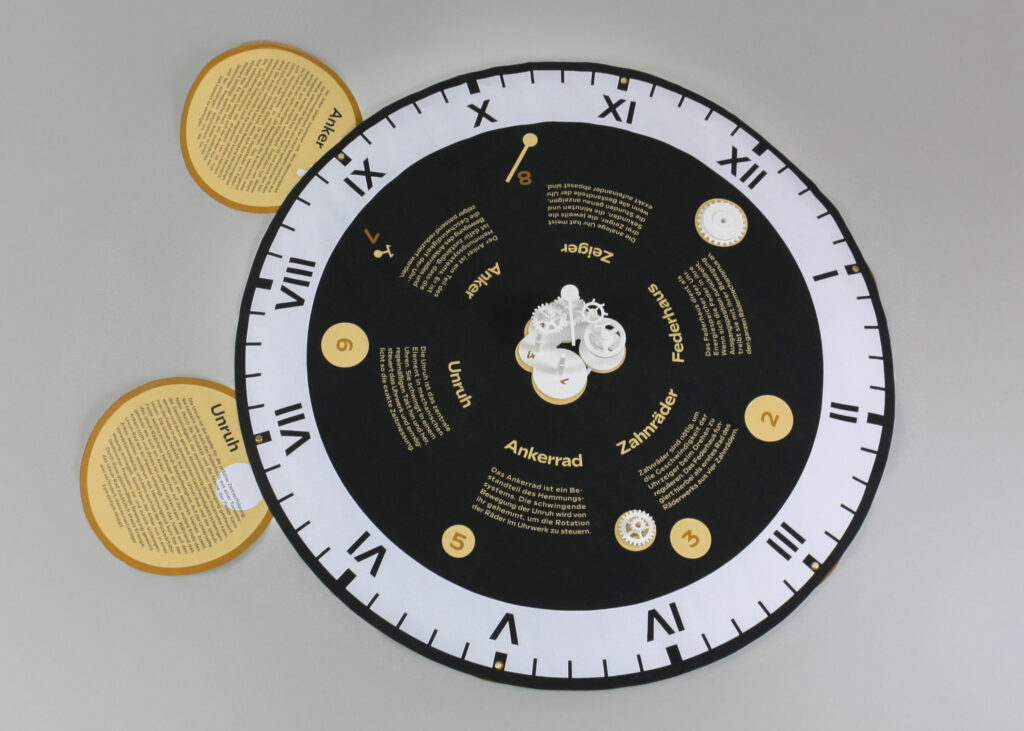
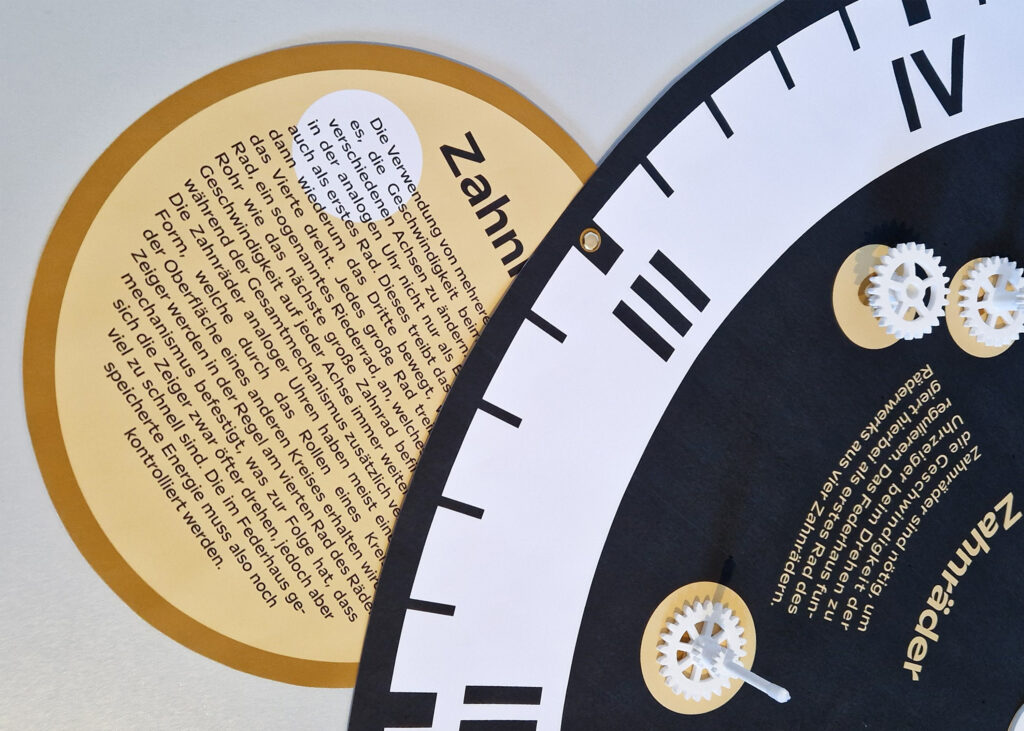
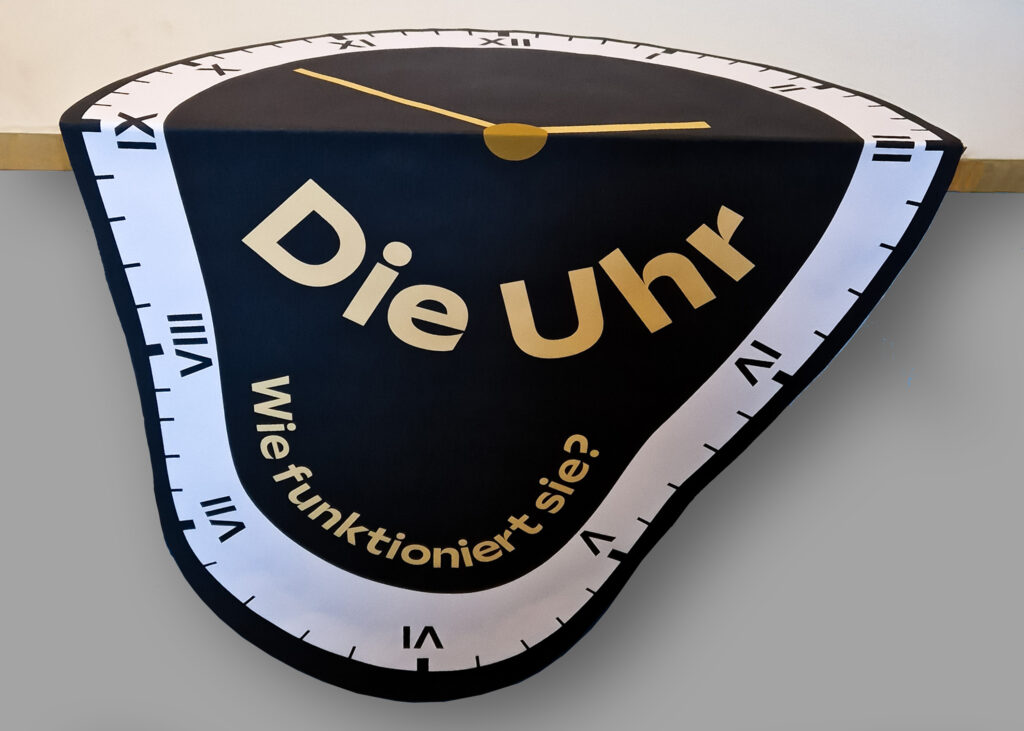
The project “Die Uhr: wie funktioniert sie?” explains the wheel mechanism of a clock, focusing on its essential components such as the mainspring, gears, escapement wheel, balance wheel, anchor, and hands. To visualize this, a poster was designed in combination with simplified 3D models, allowing viewers to understand each element on different levels of detail. The first layer offers short explanations of individual elements, while the second layer provides more in-depth information supported by research. The design builds on a clear typographic and visual system, which helps users to understand the workings of a clock.
3rd Semester, oct’ 23 – feb’ 24, interaction design
core Idea
The core idea of the project stems from the observation that very few people truly understand how a clock works, despite its ubiquitous presence in everyday life. The topic itself can seem abstract and highly technical, but through clear visual language, layered explanations, and tangible 3D models, the project transforms this seemingly dry subject into an engaging learning experience. By reducing complexity and focusing on the essentials of the gear mechanism, the project aims to spark curiosity and make the inner workings of a clock more approachable.
3d-Model
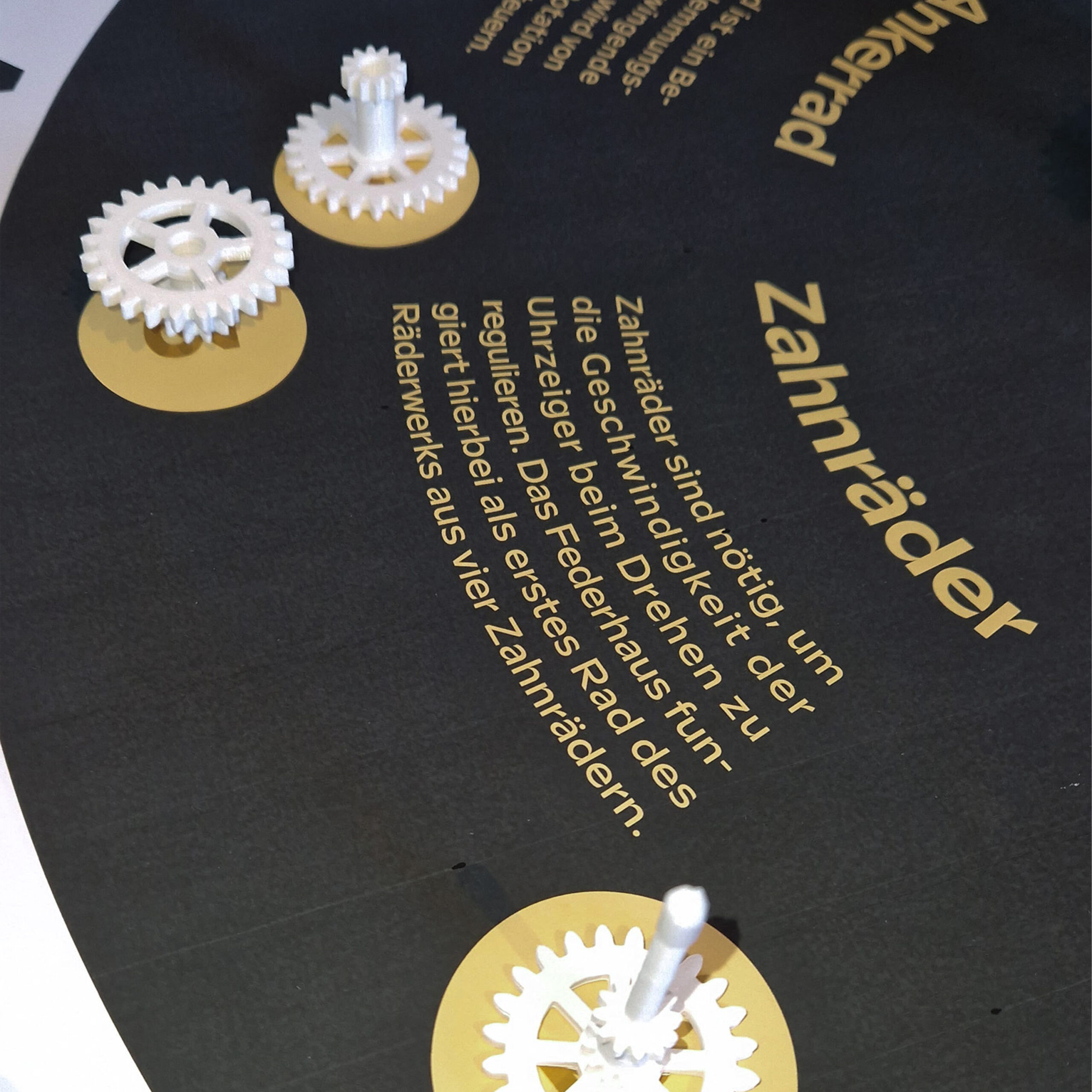
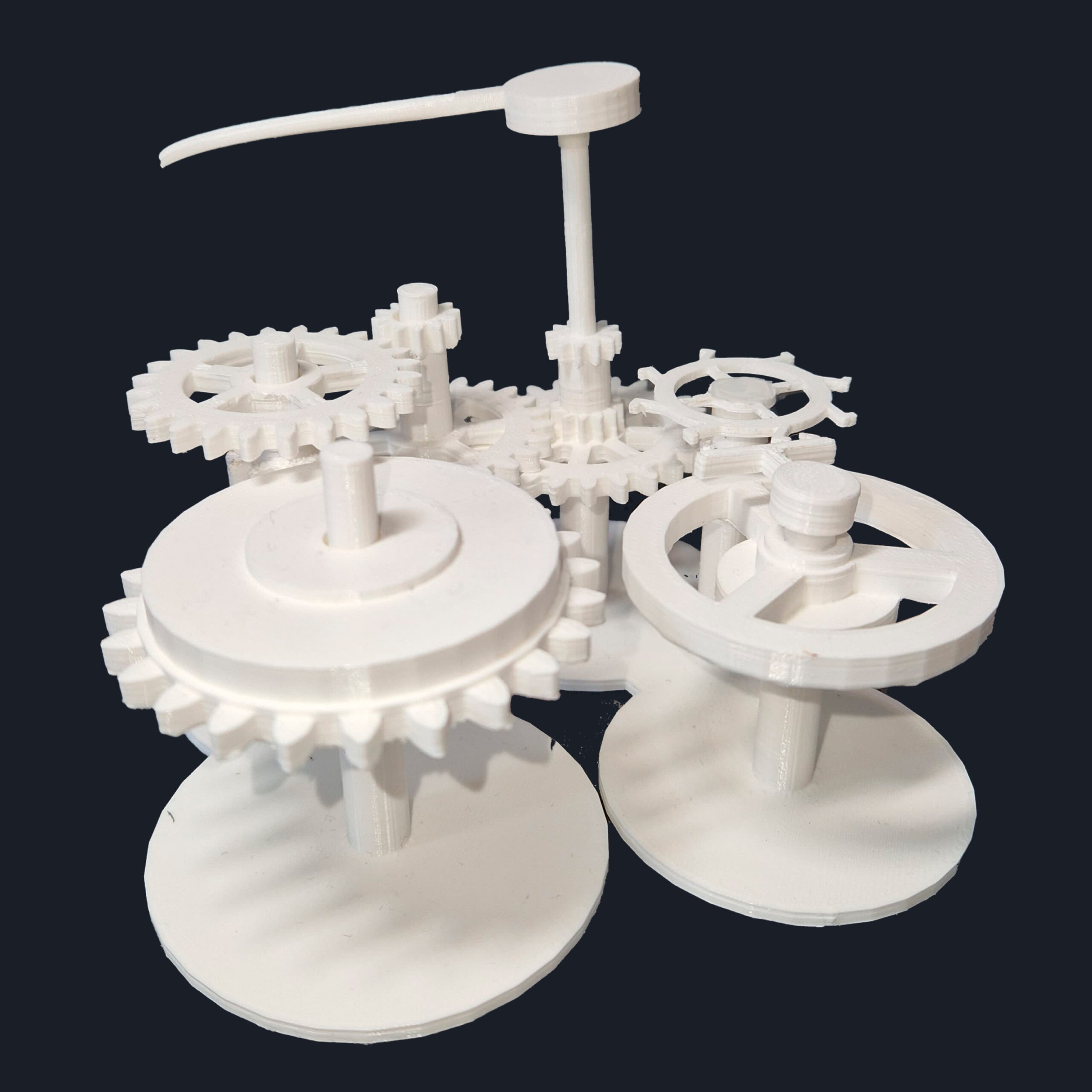
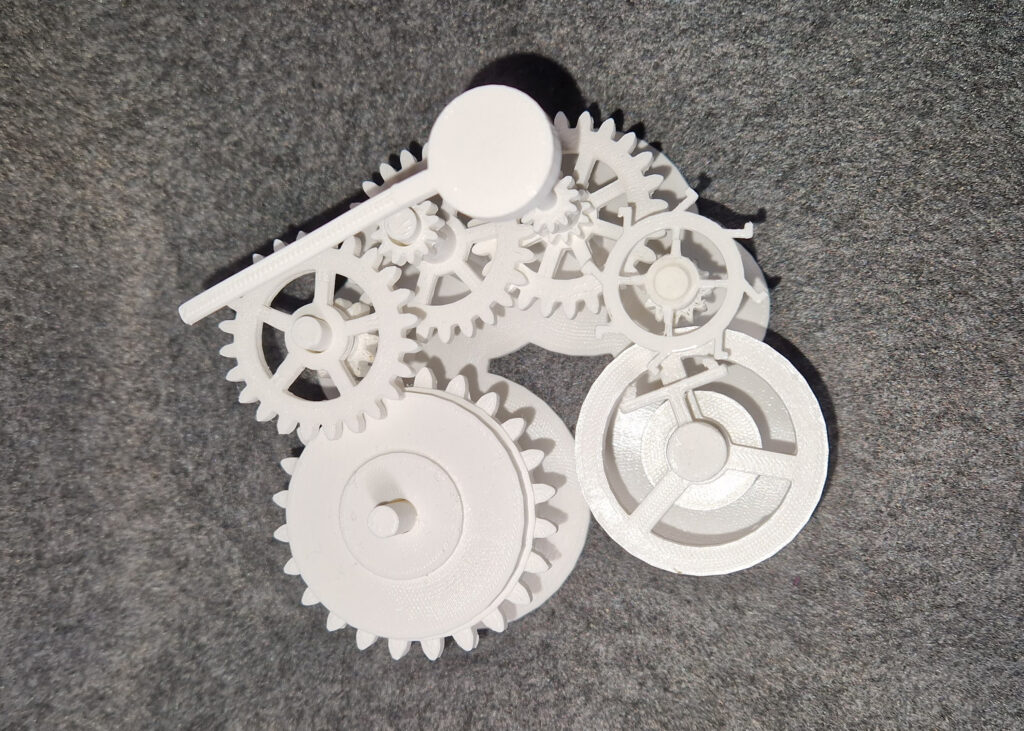
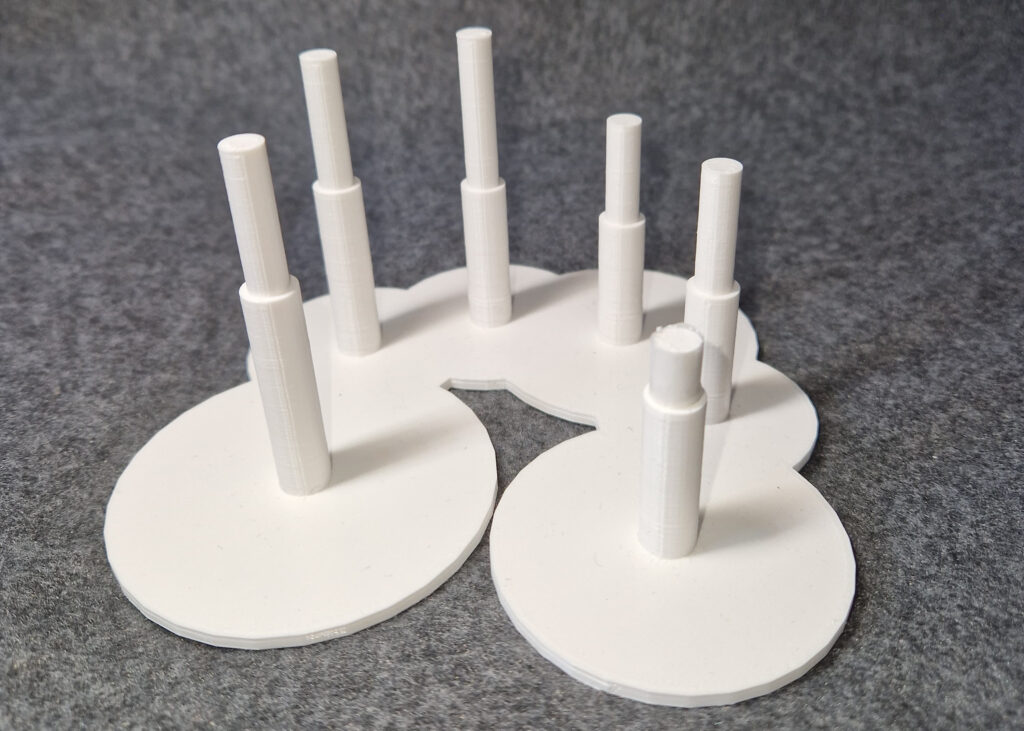
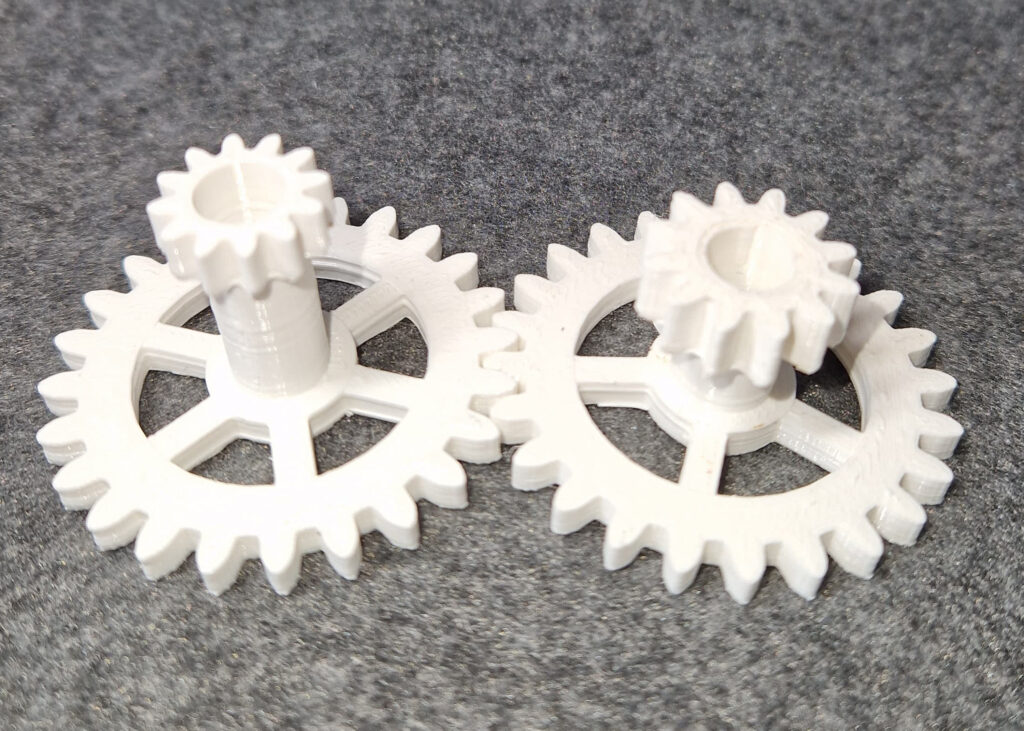
A central element of the project is the set of simplified 3D-printed models that represent the clock’s internal components. These models were designed in Blender and printed in white, allowing a neutral base for later integration with the design of the project. By making the gears and mechanisms tangible, the models provide a hands-on learning experience, complementing the theoretical explanations on the poster.
Exhibition
For the exhibition, the poster and 3D-printed elements were combined: The poster was designed with two levels of information. On the first layer, viewers could quickly grasp the basics of each clock component, while additional panels could be pulled out from beneath the main poster to reveal more detailed informations. The 3D-printed parts were placed alongside the corresponding texts and numbered for clarity. By following these numbers, visitors were able to assemble the mechanism themselves and experience how the individual elements interact with each other.
Reproduction
Process
The project followed a clear timeline: It began with research on the individual gears and the overall structure of the mechanism, followed by the drafting of explanatory texts and a step-by-step breakdown of the process. In parallel, design research informed the development of the poster’s layout and style. Once the models were completed digitally, they were printed in 3D. These physical components were then integrated with the poster design to create the exhibition setup. The final weeks were dedicated to producing the poster and assembling all elements. Each stage built upon the previous one, ensuring a well-structured process that balanced research, design, and production.
Scribbles
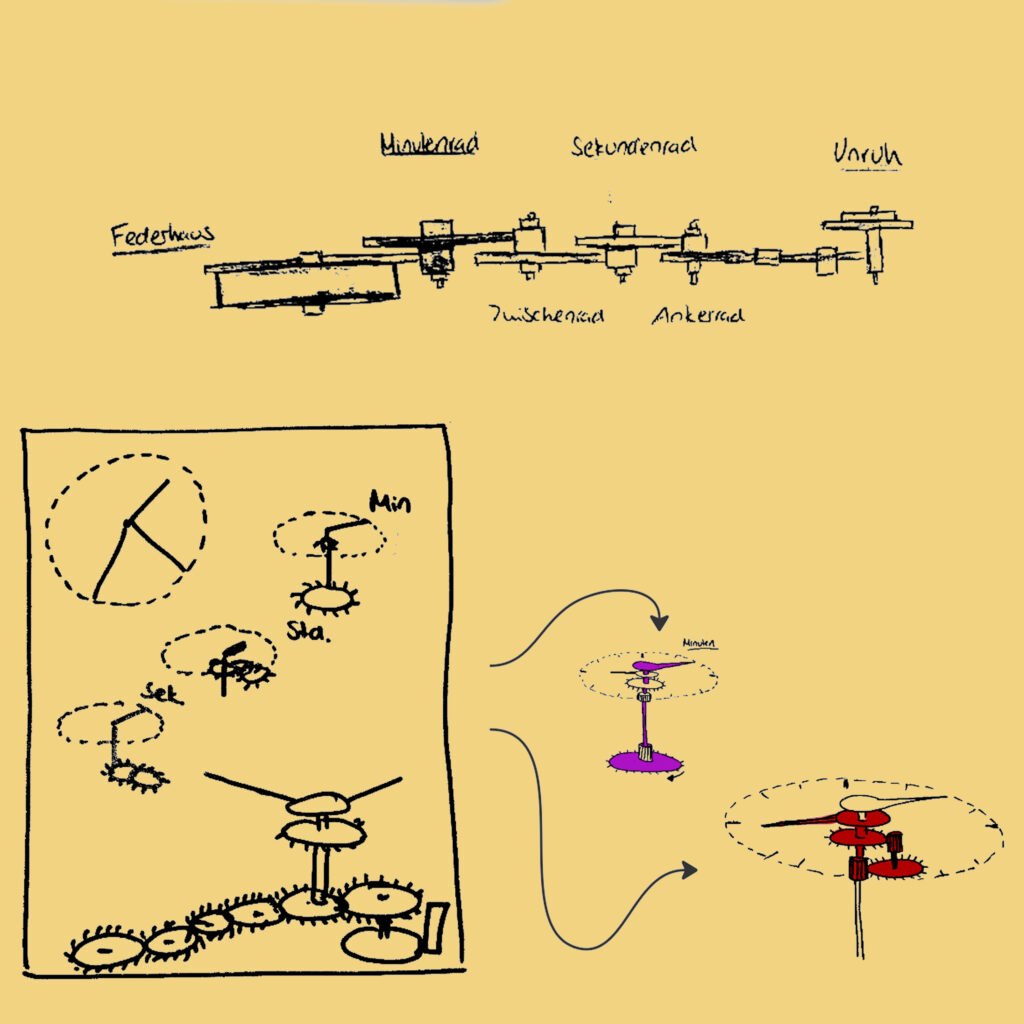
Initial scribbles served to break down the clock mechanism into simplified forms and visual concepts. They translated the complex structure of a clock mechanism into simplified sketches. These drawings were used to explore how individual components could be visually represented and how technical content might be made accessible. They laid the foundation for the poster design by clarifying proportions, relationships, and the potential flow of information.
Design variants
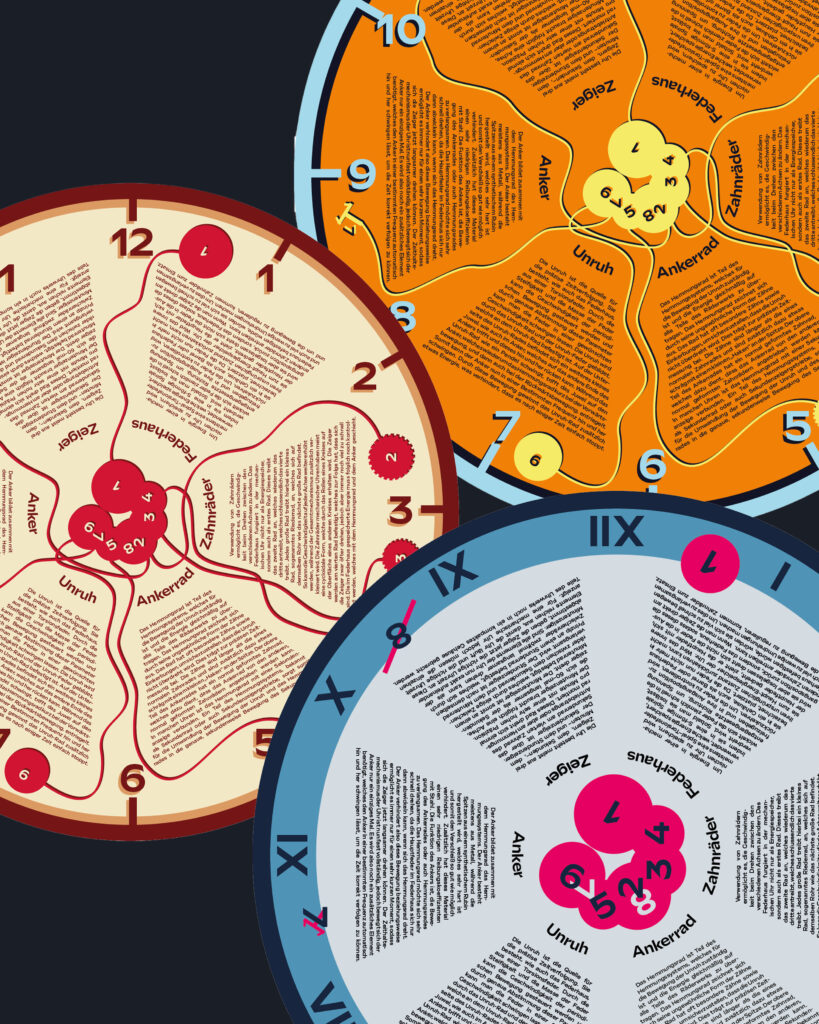
Different design variants were developed to explore how the complex mechanism of a clock could be communicated visually. Each version experimented with layout, typography, and the use of color to test readability and focus. While some designs leaned towards a reduced style, others placed more emphasis on visual connections and highlighted elements. These iterations made it possible to compare levels of abstraction and find a balance between technical precision and accessibility, ultimately leading to a clear and engaging final design.
Research
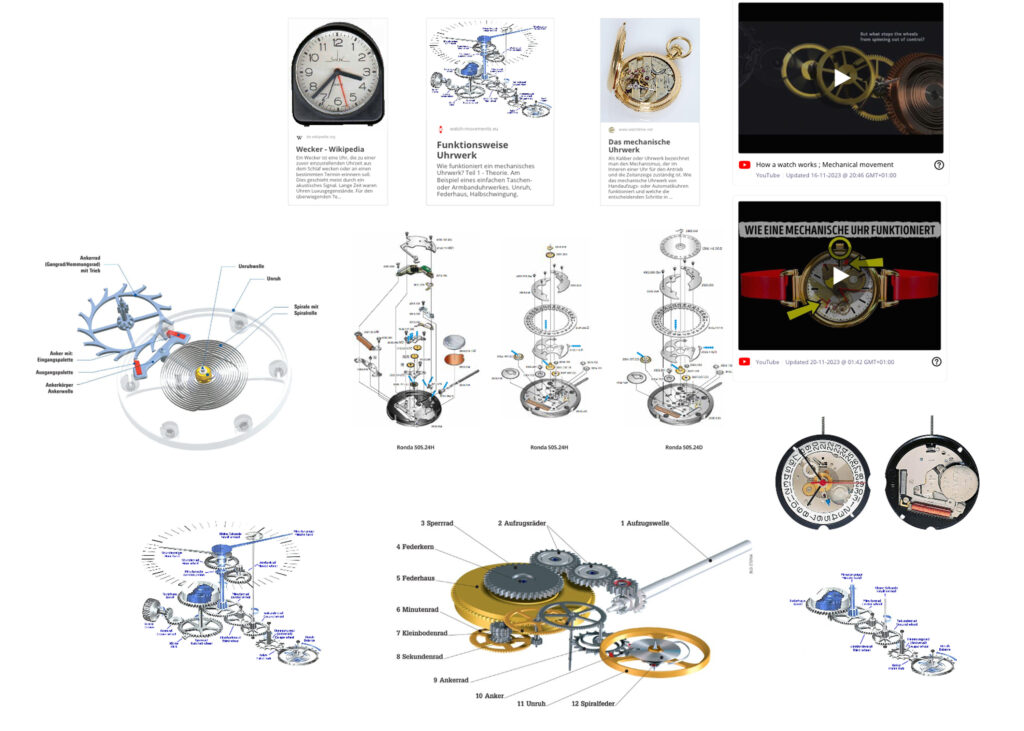
Research provided the basis for the project. The focus was on understanding the function and interaction of the core elements of a clock. This knowledge informed both the explanatory texts and the visual representation, making it possible to explain the mechanism step by step without oversimplifying its complexity.
Blender-File
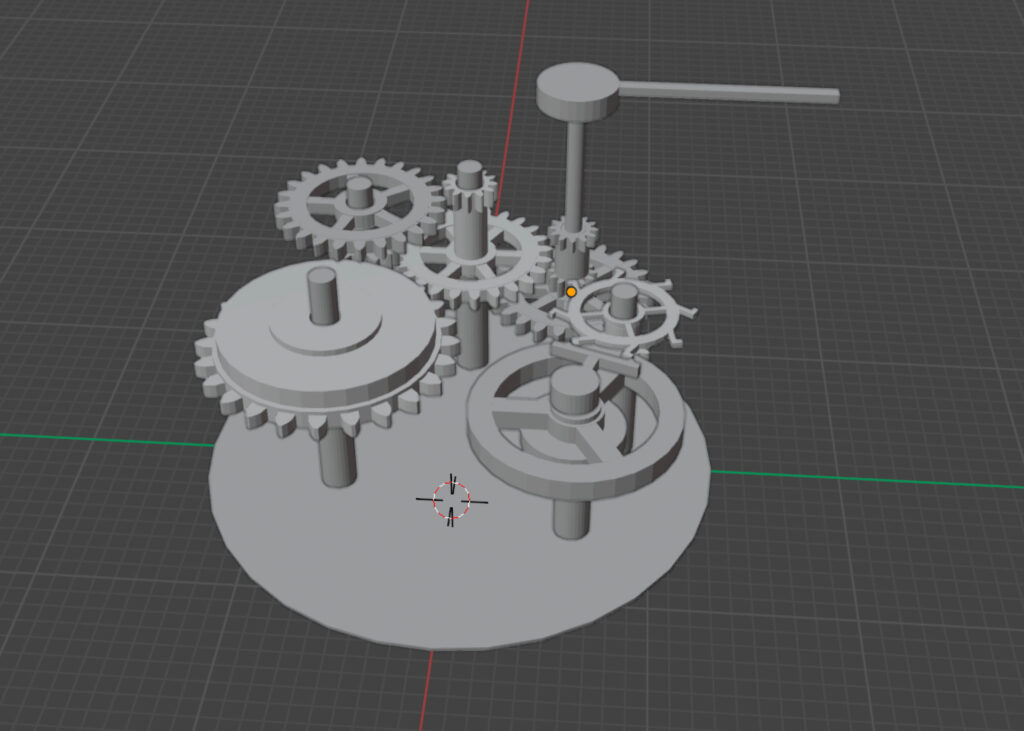
The individual parts of the mechanism were modeled in Blender as a preparation for 3D printing. The digital file not only acted as a technical template for production but also as a tool for visualizing proportions and connections between the components. This step was crucial for aligning the physical models with the explanations and design of the poster.
Styleguide
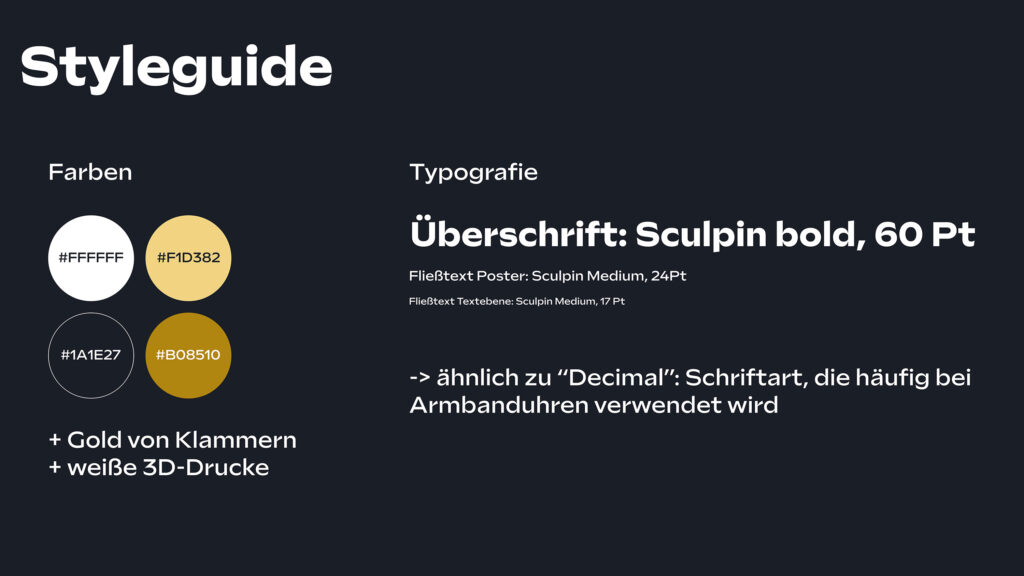
A styleguide ensured visual consistency across all elements of the project. The color palette combined white, gold, yellow, and dark blue, while the typeface “Sculpin” was chosen for its formal clarity and its resemblance to the “Decimal” typeface often used in watch design. Hierarchies were established through bold headings and medium weights for body text.
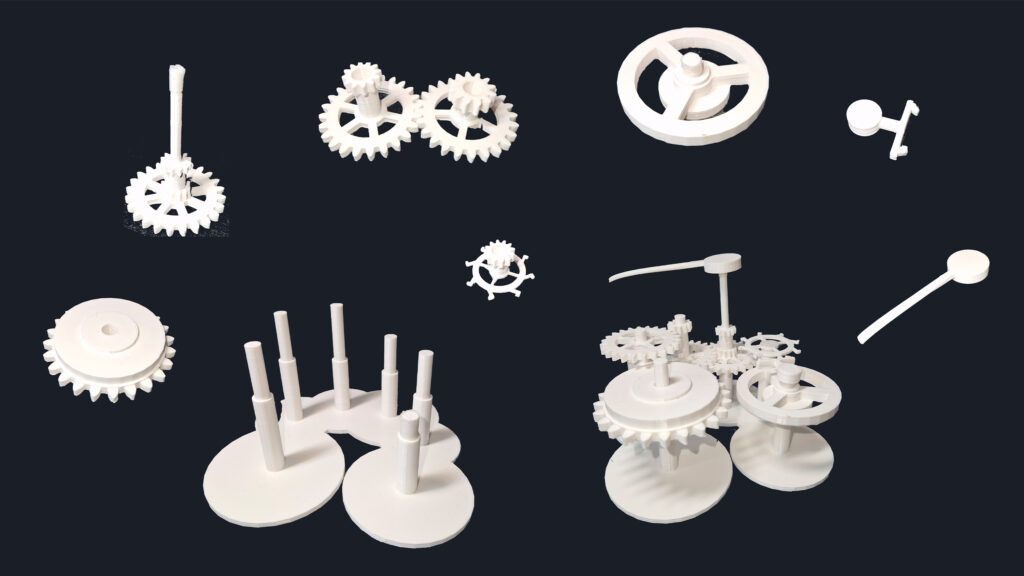
printed 3D-Model
The 3D-printed models brought the abstract clock mechanism into a tangible form. At first, the printing process presented several challenges, as the delicate parts did not come out with the desired precision. After a number of adjustments and repeated attempts, the models were successfully produced.
Get in touch!
©Sophie Doma
2025 portfolio
7th semester, hs hof
Communication Design